A stripe of white paint tells drivers where bikes belong. It does not stop a delivery van from parking there or a distracted driver from drifting across it. The difference between a bike lane that looks good on a map and one that a parent would let a twelve-year-old ride comes down to physical separation, careful intersection design, and a connected network. Here is what to look for, and how San Franciscans can push for streets that are truly safe.
Key points
- Bike facilities range from painted lanes to raised, curb-separated tracks; comfort and safety rise sharply with physical separation.
- Most serious conflicts happen at intersections, so protected intersections, daylighting, leading intervals, and bike signals matter as much as the lane itself.
- A network is only as strong as its weakest link: one unprotected gap can keep most people from riding a route at all.
- Quick-build projects deliver safety improvements fast; capital projects make them permanent. Good programs use both.
- Residents can shape projects by joining community meetings, writing letters, testifying at SFMTA hearings, and reporting maintenance problems.
What "protected" really means
Transportation planners often talk about designing for "all ages and abilities." The test is simple: would a confident adult, a cautious beginner, a child, and an older rider all feel comfortable using this street? Most people who say they would like to bike more but do not are worried about one thing: sharing space with fast or heavy motor traffic. Paint alone rarely changes that calculation. Physical separation does.
A truly protected bike lane has three qualities. It keeps vehicles out of the bike space along the block, it manages turning conflicts at intersections and driveways, and it connects to other comfortable routes so riders are not stranded at the end of a block. If any of those is missing, the lane may help experienced riders but will not draw the much larger group of people who are interested in biking yet concerned about safety.
This is why safer streets are a core part of our platform. San Francisco adopted Vision Zero in 2014 with the goal of eliminating traffic deaths by 2024. The city did not meet that goal and has since recommitted to it. Physical protection for people biking and walking is one of the most direct tools for getting there. You can follow the city's program at visionzerosf.org.
The spectrum of bike facilities
Painted bike lanes
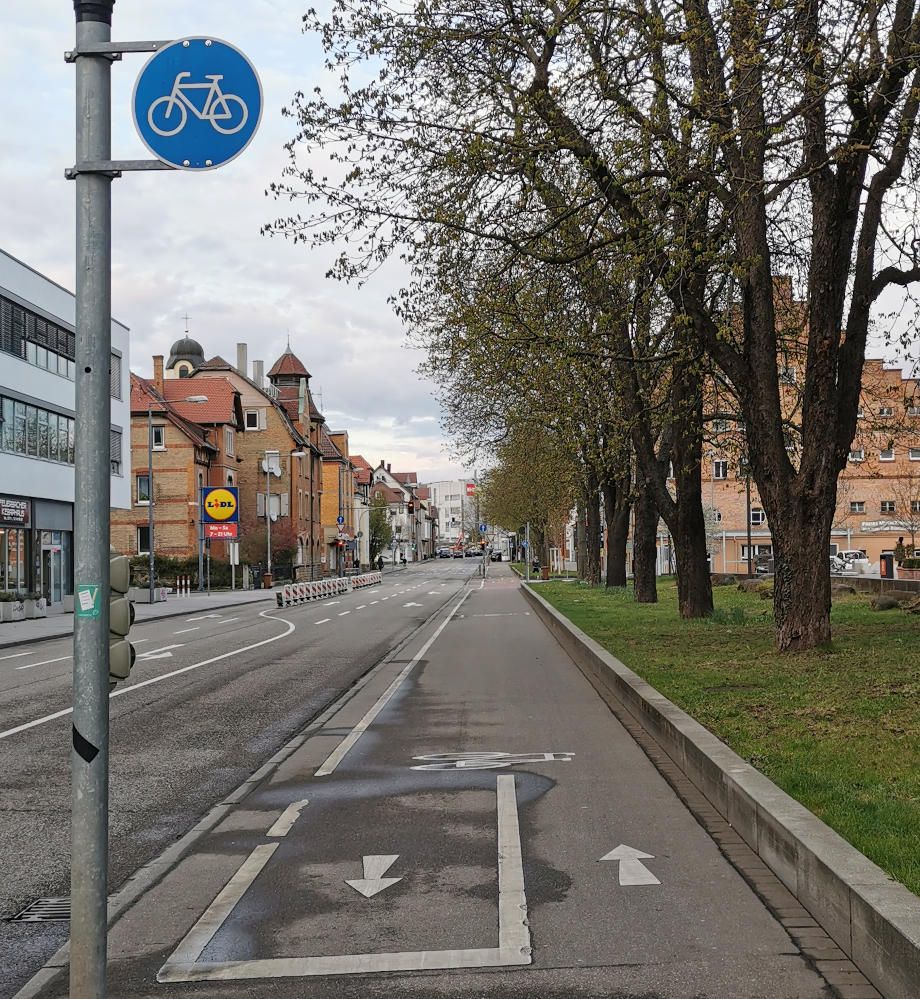
A painted lane is a stripe, a bike symbol, and sometimes green paint at conflict points. It is fast and cheap to install and clarifies where riders should be. But it offers no physical protection, and it is frequently blocked by double-parked cars, ride-hail pickups, and delivery trucks. On streets next to parked cars, a narrow painted lane can also put riders squarely in the "door zone," where an opening car door can knock them into traffic.
Buffered bike lanes
A buffered lane adds a striped space, typically with diagonal or chevron markings, between the bike lane and moving traffic, parked cars, or both. The buffer gives riders more room from passing vehicles and doors. It is a real improvement over a plain stripe, but drivers can still cross it freely, and it is often used as an informal loading zone.
Parking-protected bike lanes
Here the order of the street is flipped: the bike lane runs along the curb, and the parking lane sits between riders and moving traffic. A painted buffer, often with flexible posts, separates the bike lane from parked cars so passenger doors do not open into riders. Parking-protected lanes make good use of existing street width and dramatically improve comfort along the block. Their weak points are intersections and driveways, where parked cars can hide riders from turning drivers unless the approach is kept clear.
Curb-separated and raised bike lanes
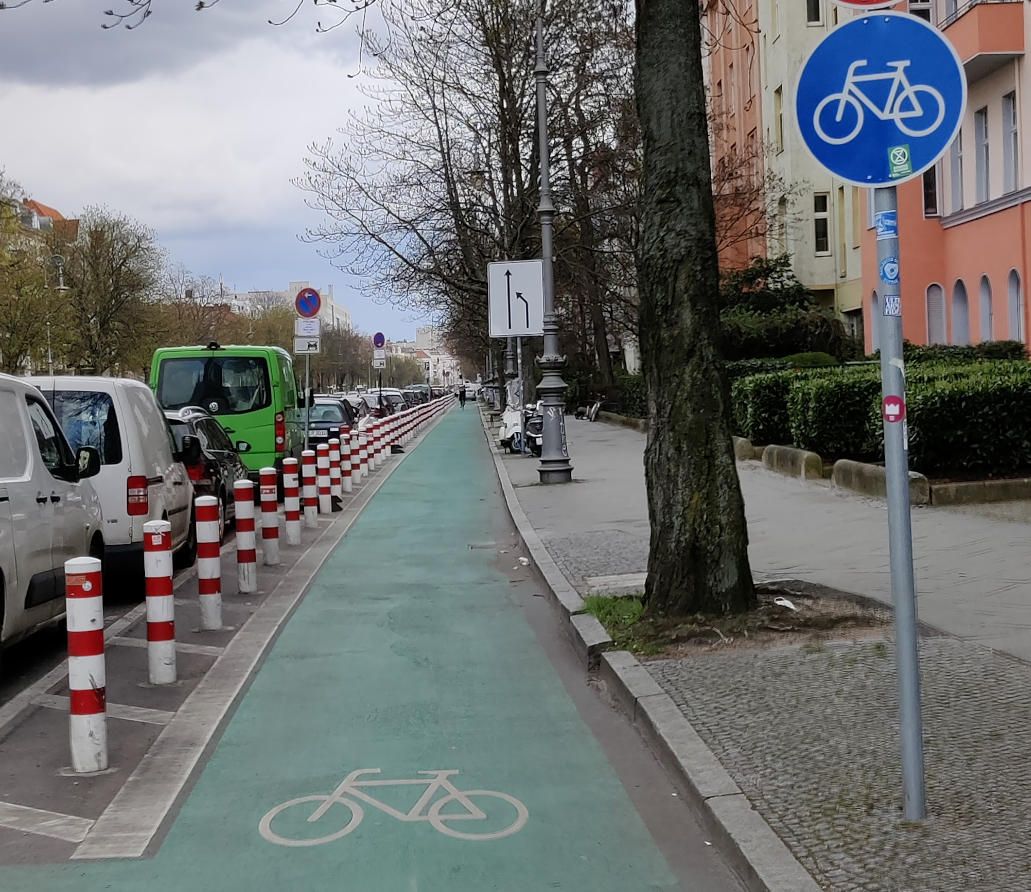
The most robust protection is a continuous concrete curb or median between the bike lane and traffic, or a lane raised above street level, sometimes to sidewalk height or an intermediate height with a mountable curb. Concrete does not get knocked over, and a raised lane sends an unmistakable signal that the space is not for cars. These designs require drainage work and careful coordination with utilities and bus stops, which makes them slower and more expensive to build.
Two-way cycle tracks
A two-way cycle track carries bikes in both directions on one side of the street, separated from traffic. It can be an efficient use of space on one-way streets or along parks and waterfronts with few cross streets. The tradeoff is at intersections and driveways: drivers turning across the track may not look for riders coming from the "unexpected" direction. Two-way tracks work best with few driveways, dedicated bike signals, and clear sightlines.
Comparing facility types at a glance
The table below summarizes how the main options compare. Costs and timelines vary widely from project to project, so the ratings are relative rather than exact.
| Facility type | Rider comfort | Relative cost | Speed to build | Best use |
|---|---|---|---|---|
| Painted lane | Low | Very low | Very fast | Low-speed, low-volume streets; temporary placeholder |
| Buffered lane | Low to moderate | Low | Very fast | Wide streets where separation is planned but not yet funded |
| Parking-protected lane | Moderate to high | Low to moderate | Fast (quick-build) | Busy streets with curbside parking and few driveways |
| Curb-separated or raised lane | High | High | Slow (capital project) | Major corridors, high-speed or high-volume streets |
| Two-way cycle track | High along the block | Moderate to high | Moderate | One-way streets, waterfronts, park edges with few cross streets |
Intersections: where safety is won or lost
A beautifully protected block means little if the protection disappears at the corner. Turning conflicts at intersections are among the most common sources of serious crashes involving people on bikes. Several proven treatments address them.
Protected intersections
A protected intersection carries the separation through the corner. Concrete corner islands hold the bike lane back from the traffic lane, so turning drivers make a tighter, slower turn and cross the bike path at close to a right angle, where riders are directly in view. Riders waiting at a red light sit ahead of turning cars rather than beside them.
Daylighting
Daylighting means keeping the curb space near a crosswalk free of parked vehicles so drivers, riders, and pedestrians can see each other. A recent California law prohibits parking within 20 feet of the approach to many crosswalks, and red curbs, bollards, planters, or bike corrals can make that clear space self-enforcing. Daylighting is especially important next to parking-protected lanes.
Leading pedestrian and bicycle intervals
A leading interval gives people walking, and sometimes biking, a few seconds of green before parallel car traffic gets its green. That head start puts them into the intersection where turning drivers can see them before those drivers begin to move. It is inexpensive, requiring only signal timing changes.
Bike signals
Dedicated bike signals let engineers separate bike movements from turning car movements in time. They are especially valuable for two-way cycle tracks and at complex intersections where a leading interval alone is not enough.
Hardened centerlines
Rubber curbs, posts, or low concrete bumps along the centerline at an intersection force left-turning drivers to slow down and turn squarely instead of cutting the corner at speed. They protect people in crosswalks and riders waiting on the far side.
The network principle: closing the gaps
People do not ride individual bike lanes; they ride trips. A trip from home to school or work may cross a dozen blocks, and if three of those blocks force a rider into fast traffic, the whole trip feels unsafe. For many people, a route is only as comfortable as its worst segment.
That makes connectivity the guiding principle of good planning. A useful network has:
- Continuous protected corridors that do not end abruptly at a busy intersection.
- Dense coverage, so most homes are within a few blocks of a comfortable route.
- Safe connections to transit, so people can combine biking with BART, Caltrain, or Muni.
- Equitable distribution, so neighborhoods that have historically received less investment are not left with the most dangerous streets.
The car-free conversion of lower Market Street in January 2020 shows how removing private cars from a key corridor can transform the experience for people biking, walking, and riding transit. The lesson extends beyond any one street: priority corridors deliver the most when they plug into a connected grid.
Quick-build versus capital projects
SFMTA uses a quick-build approach to deliver safety changes in months rather than years. Quick-build projects rely on paint, flexible posts, signal timing changes, parking adjustments, and other low-cost, adjustable materials. They let the city respond quickly to dangerous corridors, test designs in the real world, and adjust based on what works.
Capital projects are larger, permanent reconstructions: concrete curbs, raised lanes, new signals, drainage, sometimes repaving and utility work. They take much longer to plan, fund, and build, but they last for decades and are far more resistant to damage and encroachment.
The two approaches work best together. A quick-build project can deliver immediate protection and build public familiarity, and a later capital project can lock in the design with durable materials. Advocates should support quick-build as a first step while making sure permanent upgrades stay on the calendar, so flexible posts do not become the long-term answer by default.
Maintenance and enforcement: keeping lanes usable
Even the best-designed lane fails if it is not maintained. Common problems include:
- Debris and glass. Protected lanes often sit outside the reach of standard street sweepers. Narrow sweepers and regular schedules keep them rideable.
- Knocked-down posts. Flexible posts are designed to bend, but they are regularly flattened or broken off. Gaps invite drivers to enter the lane. Prompt replacement, and upgrades to concrete where posts keep failing, are essential.
- Faded markings. Paint wears quickly under traffic. Faded buffers and crosswalks lose their effect.
- Blocking. Delivery vehicles, ride-hail stops, and private cars parked in bike lanes force riders into traffic. Consistent enforcement, plus enough legal loading space nearby, reduces the temptation.
Residents can report problems through the city's 311 service. Reports create a record that helps prioritize repairs and makes the case for more durable designs.
How residents can request and support projects
Street changes in San Francisco go through public outreach and, for many changes, formal approval steps. Your voice counts at every stage. Project information is posted at sfmta.com.
- Ask for a fix. Report dangerous locations through 311 and contact your district supervisor. Specific locations and real experiences carry weight.
- Join community meetings and surveys. Early outreach is where designs are shaped. Attend open houses, fill out surveys, and bring neighbors.
- Write letters of support. Short, personal letters to project staff and decision-makers help counter the perception that only opponents care.
- Testify at public hearings. Many changes, such as parking removal or turn restrictions, go through an SFMTA public hearing, and larger projects may go to the SFMTA Board of Directors. One or two minutes of public comment, in person or remotely when allowed, can make a difference.
- Show up after it is built. Ride the new lane, thank the people who made it happen, and keep reporting maintenance needs.
Organized members multiply that impact. A coalition whose members genuinely shape its priorities can mobilize more people for hearings, which is one reason we care about member voting rights. Learn how to plug in through our programs and stay informed through our newsletter.
Frequently asked questions
What is the difference between a buffered and a protected bike lane?
A buffered lane adds painted space between riders and traffic, but vehicles can still cross it. A protected lane adds a physical barrier, such as parked cars, curbs, posts, or a raised surface, that keeps vehicles out of the bike space.
Why do protected bike lanes need special intersection designs?
Many serious conflicts happen when drivers turn across a bike lane. Protected intersections, daylighting, leading intervals, and bike signals slow turns, improve visibility, and separate movements in time so the protection continues through the corner.
How can I support a bike lane project in my neighborhood?
Attend community meetings, fill out project surveys, write short personal letters of support, and give public comment at SFMTA hearings. Reporting maintenance problems through 311 after the project is built also helps keep it safe.
Safe streets happen when people show up. Join us in pushing for a connected, protected network that works for riders of all ages and abilities.
Get involved