In 2014, San Francisco promised to end traffic deaths within ten years. The 2024 deadline came and went with the goal unmet, and the city has since recommitted to Vision Zero. The framework is still the right one, but a pledge without measurable follow-through is only a slogan, and members of the bike community are well placed to make sure the city delivers.
Key points
- Vision Zero began in Sweden in 1997 and rests on a "safe system" idea: people will make mistakes, so streets must be designed so that those mistakes are not fatal.
- San Francisco adopted Vision Zero in 2014 with a 2024 target that was not met. The city's recommitment makes public accountability more important, not less.
- Most severe and fatal crashes happen on a relatively small share of city streets, the high-injury network, so where the city invests matters as much as how much it spends.
- Speed is the biggest lever. Recent California laws give San Francisco more room to lower speed limits and to pilot speed safety cameras.
- Members can drive accountability through project tracking, public comment, public records requests, and coalitions with pedestrian, transit, and disability advocates.
What Vision Zero actually means
Sweden's parliament adopted Vision Zero as national road-safety policy in 1997. Its starting point was ethical rather than technical: no loss of life on the road is an acceptable price for mobility. That sounds simple, but it overturned decades of traffic-safety practice.
The traditional approach treats crashes as mostly the fault of individual road users and tries to change their behavior through education campaigns and ticketing. Vision Zero accepts that human beings are fallible. Drivers misjudge gaps, people walking step out from behind parked vans, people on bikes swerve around potholes. Instead of expecting perfect behavior, a safe system asks the people who design, build, and operate streets to make sure an ordinary error does not end in a funeral.
The safe system principles
- People make mistakes. Street design should anticipate predictable errors instead of punishing them after the fact.
- The human body has limits. We can survive only so much force. A street is safe when the likely impact forces stay below the threshold for death and serious injury.
- Kinetic energy is the core problem. Kinetic energy rises with the square of speed, so a vehicle traveling at 40 mph carries four times the energy of the same vehicle at 20 mph. Small changes in speed produce large changes in harm.
- Responsibility is shared, but designers carry the most. Road users must follow the rules, yet engineers, planners, elected officials, and vehicle makers control the conditions that decide whether a crash is survivable.
- Redundancy. Multiple layers of protection, such as lower speeds, physical separation, and better signal timing, mean that if one layer fails, another still prevents a fatality.
- Be proactive. Fix risky designs based on known patterns, rather than waiting for someone to be killed at a particular corner.
San Francisco's commitment and its missed deadline
San Francisco adopted Vision Zero in 2014, among the earliest large US cities to do so, with the goal of eliminating traffic deaths by 2024. That goal was not met. People have continued to die on city streets every year, and the city has since recommitted to the policy rather than abandoning it.
It is fair to acknowledge real progress. The city has built protected bike lanes, daylighted intersections, added leading pedestrian intervals so people can start crossing before cars turn, retimed signals, and, in January 2020, made lower Market Street car-free. The SFMTA has also used faster "quick-build" methods to get paint, posts, and signal changes on the ground while longer-term capital projects are designed.
Progress has been uneven, though. Projects have been slowed by lengthy outreach cycles, disputes over parking and loading, staffing and funding constraints, and a tendency to scale back designs under pressure.
A missed deadline is not a reason to abandon a goal. It is a reason to ask, specifically, what will be different this time, who is responsible, and how the public will know.
The high-injury network: where danger concentrates
One of the most useful tools in San Francisco's Vision Zero program is the high-injury network. When crash data is mapped, a striking pattern appears: a relatively small share of city streets accounts for a large majority of severe and fatal injuries. These corridors tend to be wide, multi-lane arterials with fast traffic, long pedestrian crossings, frequent turning conflicts, and a lot of people walking, biking, and waiting for transit.
The network also overlaps heavily with neighborhoods where more residents walk and ride transit out of necessity, including many seniors, people with disabilities, lower-income households, and communities of color. That makes the high-injury network an equity map as well as a safety map.
From the "five E's" to a safe system
Many early American Vision Zero programs were organized around a list of E's: engineering, enforcement, education, encouragement, and evaluation, sometimes with equity or emergency response added. The list is a handy checklist, but it implies each element carries equal weight. In practice, education and enforcement campaigns are cheaper and faster to launch than rebuilding a street, so they can crowd out the physical changes that actually prevent deaths.
The safe system approach reorders priorities. The comparison below shows the difference.
| Question | Traditional "E's" approach | Safe system approach |
|---|---|---|
| Who is responsible? | Mainly individual road users | System designers and operators, shared with users |
| Response to a crash | Determine who was at fault | Ask why the street allowed a mistake to become fatal |
| Main tools | Awareness campaigns and ticketing | Street design, speed management, separation, policy |
| Role of speed | One factor among many | The central organizing variable |
| Measure of success | Fewer collisions or more citations overall | Fewer deaths and serious injuries, especially on the high-injury network |
| Timing | Reactive, after crashes cluster | Proactive, based on risk patterns |
Education and enforcement still have a role, but as layers on top of good design, never as substitutes for it.
Speed management: the biggest lever
For decades, California speed limits were set largely by the "85th percentile" rule: traffic engineers measured how fast most drivers were already going and set the limit near that speed. The result was a ratchet. If drivers sped up, limits could rise, and cities had little room to lower them.
That began to change with AB 43 (2021), which gave local governments more flexibility to lower speed limits in certain circumstances, such as on designated safety corridors and in business activity districts, and to consider the safety of vulnerable road users. Then AB 645 (2023) authorized a pilot program for speed safety cameras in San Francisco and a few other California cities. The law includes safeguards such as public use policies, limits on how camera data can be used, and reduced penalties for low-income drivers. You can read both bills on the state's official legislative information site.
Lower posted limits and cameras help, but the most durable speed management comes from streets that are designed for the speed they are signed for. Common tools include:
- Road diets that reduce the number of travel lanes and shorten crossings
- Narrower lanes, hardened centerlines, and tighter corner radii that slow turning drivers
- Raised crosswalks, speed cushions, and traffic circles on neighborhood streets
- Signals timed for steady progression at lower speeds rather than rewarding drivers who race between lights
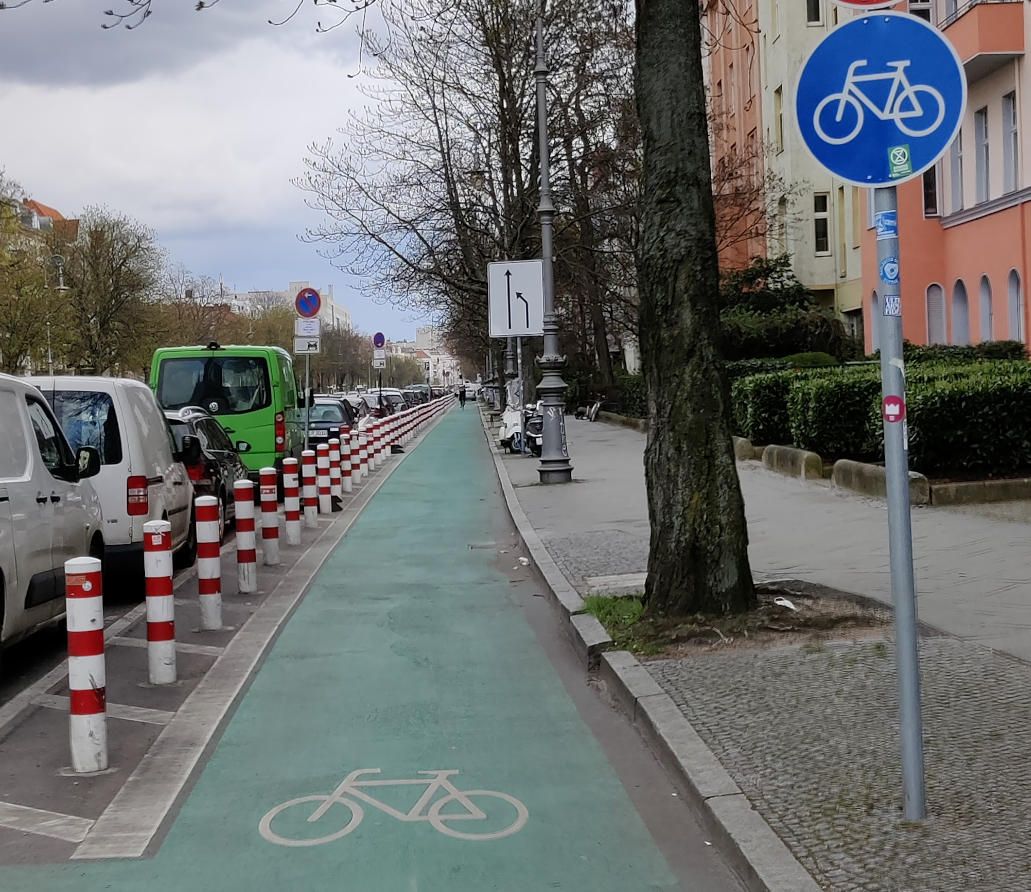
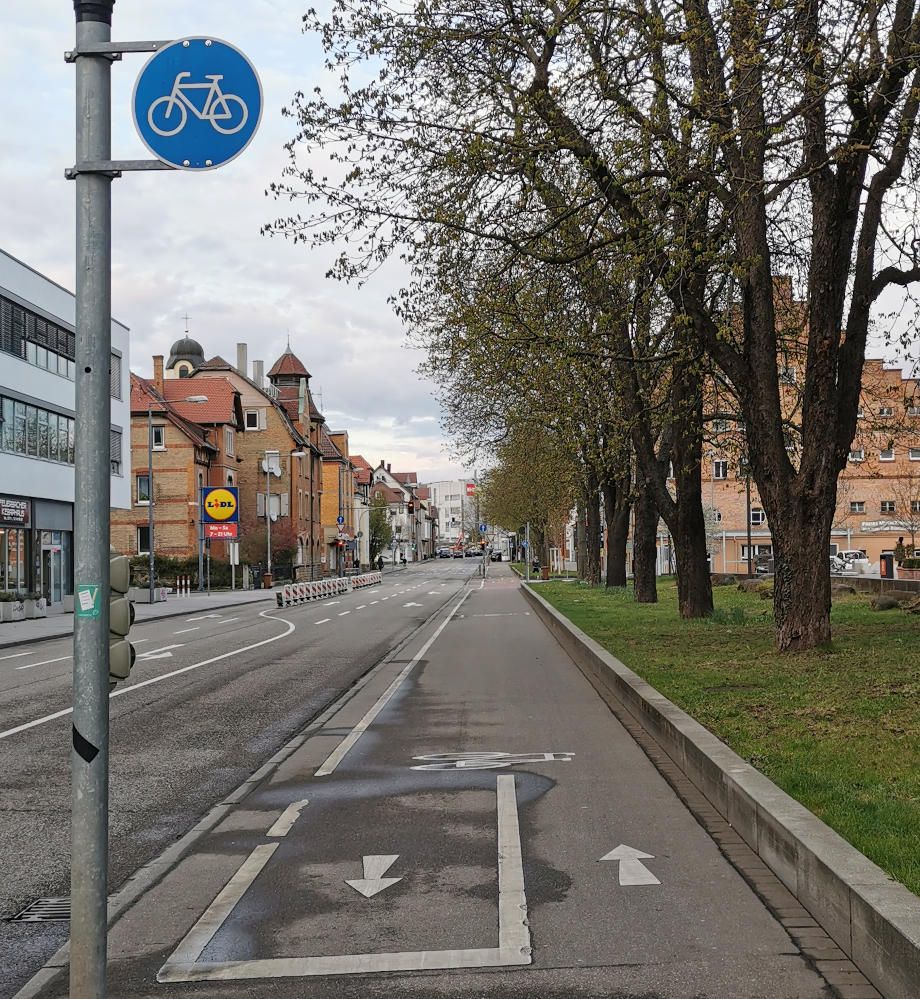
- Protected bike lanes and transit lanes that reallocate space and narrow the roadway drivers perceive
A useful question to ask about any project is whether the street's design speed matches its posted speed. If a 25 mph street feels like a highway, drivers will treat it like one.
Enforcement that is proportionate and focused
Enforcement is one of the most debated parts of Vision Zero. Done poorly, it creates harm without improving safety. Done well, it targets the behaviors most likely to kill someone:
- Focus on the most dangerous behaviors. Speeding, failing to yield to people in crosswalks, running red lights, dangerous turns, and impaired driving cause a disproportionate share of serious harm.
- Keep it proportionate. A person on a bike rolling slowly through an empty intersection does not pose the same risk as a driver speeding through a school zone. Resources should track potential harm.
- Avoid pretextual stops. Stops for minor equipment or paperwork issues do little for safety and can fall unevenly on particular communities. Publish data on who is stopped, where, and why.
- Use well-designed automated enforcement. Cameras placed using crash data apply rules consistently and cannot be applied selectively, provided privacy and equity safeguards are real.
- Measure outcomes, not activity. The right metric is fewer serious injuries, not more tickets written.
What an accountable Vision Zero program looks like
Accountability is not a mood. It is a set of practices that let the public see what was promised, what was delivered, and what happened as a result. The city's Vision Zero SF site and the SFMTA publish information that members can use as a starting point. Here is what to look for.
| Accountability marker | What good looks like | Red flag |
|---|---|---|
| Public dashboard | Regularly updated deaths and serious injuries by mode, location, and demographics, alongside project status | Data released only in annual reports or after long delays |
| Timelines | Each project lists milestones for outreach, approval, design, and construction, with explanations when dates slip | "Coming soon" with no dates, or dates that quietly change |
| Funding | Dollars shown by corridor and source, including how much goes to the high-injury network and what remains unfunded | Aggregate budgets that make corridor-level tracking impossible |
| Post-project evaluation | Before-and-after data on speeds, yielding, crashes, and ridership, published even when results disappoint | Ribbon cuttings with no follow-up |
| Clear ownership | A named agency or division responsible for each commitment, reporting publicly to the SFMTA Board and Board of Supervisors | Shared responsibility that ends up meaning no responsibility |
| Response to fatal crashes | Prompt site review and interim fixes, with the findings made public | Silence until the next crash at the same location |
A practical toolkit for members
Track project timelines
Pick the high-injury corridors in your neighborhood and build a simple shared spreadsheet: project name, agency page, approval dates, promised construction window, and current status. Check it monthly. When a date slips, note it and ask why. A clear record of delays is far more persuasive than a general complaint that "nothing gets done."
Use public comment effectively
SFMTA Board meetings, Board of Supervisors committee hearings, community meetings, and project surveys all take public input. Speaking time is usually brief, so prepare. Name the project, share one short personal experience, cite one fact, and ask for one specific action, such as keeping the protected design or committing to a construction date. Follow up in writing so your comment is part of the record.
Request the data
The California Public Records Act and San Francisco's Sunshine Ordinance give the public the right to request government records. Useful requests include before-and-after evaluations, corridor crash data, project schedules, speed studies, and analyses behind camera placement. Keep requests specific and limit date ranges to get faster, more useful responses.
Build coalitions
People on bikes are one constituency among many that benefit from safer streets. Pedestrian safety groups, transit rider organizations, senior and disability advocates, parents and school communities, small businesses, and families affected by traffic violence often share the same core asks: slower speeds, shorter crossings, and reliable transit. Our guide to bikes on Caltrain and BART shows how bike and transit advocates can reinforce each other.
Strong advocacy organizations also depend on engaged, democratic membership. Save SF Bike's platform ties Vision Zero accountability to member-led advocacy, and if you want a formal voice in setting your coalition's priorities, read our guide on how to run for your bike coalition's board. For updates on upcoming hearings, sign up for our newsletter.
Frequently asked questions
Did San Francisco meet its Vision Zero goal?
No. San Francisco adopted Vision Zero in 2014 with the goal of eliminating traffic deaths by 2024, and that goal was not met. The city has since recommitted to the policy, which is why members are pressing for clear timelines, dedicated funding, and public evaluation of results.
What is the high-injury network?
It is the set of city streets where a disproportionate share of severe and fatal traffic injuries occur. A relatively small portion of the street network accounts for a large share of serious crashes, so focusing safety investments there tends to save the most lives.
Are speed cameras allowed in San Francisco?
Yes, on a pilot basis. California's AB 645, passed in 2023, authorized San Francisco and a few other cities to pilot speed safety cameras with safeguards such as limits on data use and reduced penalties for low-income drivers. Check the SFMTA website for current locations and program details.
Safer streets happen when residents keep showing up, asking specific questions, and tracking the answers. Join other members working to hold San Francisco to its Vision Zero promise.
Get involved